Shiba Inus Sleep – How Many Hours Should Brushwood Dogs Sleep a Day?
A Shiba Inu’s sleep duration can vary depending on various factors such as age, activity level and overall health. On average, adult Shiba Inus require around 12 to 14 hours of sleep per day to remain healthy and active. However, individual differences should be taken into account. Some Shiba Inus may require slightly more or less sleep based on their unique needs.

Why Do Shiba Inus Sleep So Much?
Shiba Inus have a natural inclination towards sleeping and there are several reasons behind their sleep habits:
- Energy Conservation: Shiba Inus have a relatively high energy level and sleeping allows them to conserve energy for their active periods.
- Instinctual Behavior: As descendants of ancient Japanese breeds, Shiba Inus have retained some instinctual behaviors from their ancestors, including the tendency to sleep for extended periods.
- Rest and Recovery: Sleep is crucial for a Shiba Inu’s physical and mental recovery. It helps them maintain a healthy immune system, aids in muscle repair and supports cognitive functions.
How Much Sleep Does a Shiba Inu Puppy Need?
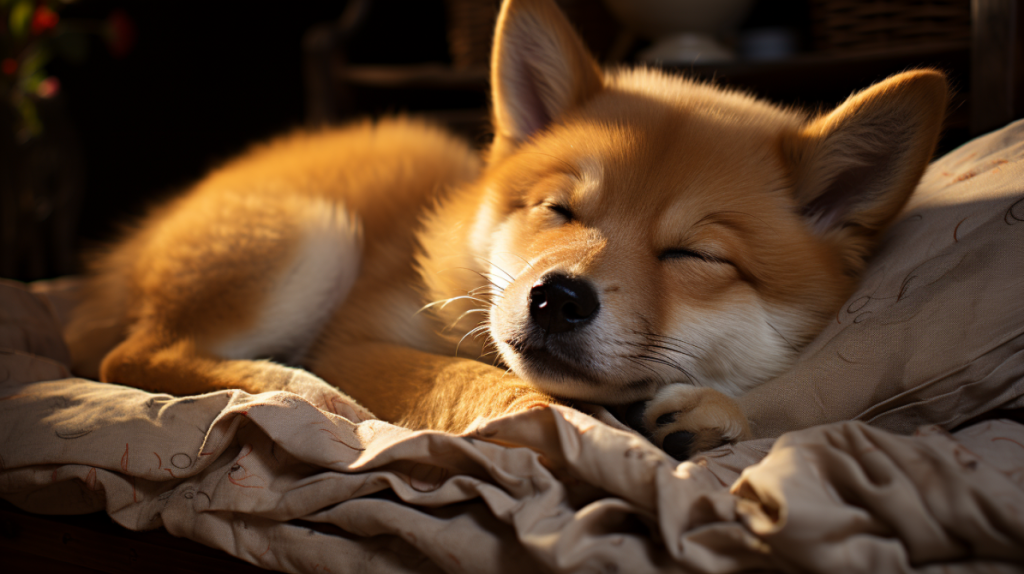
Shiba Inu puppies require more sleep compared to adult dogs due to their rapid growth and development. On average, Shiba Inu puppies need around 18 to 20 hours of sleep per day. This extensive sleep is essential for their physical and mental development. Puppies often have shorter wakeful periods interspersed with more frequent naps throughout the day. Establishing a consistent sleep routine for your Shiba Inu puppy can help them develop good sleep habits.
Factors Affecting Shiba Inu Sleep
Several factors can influence the sleep patterns of Shiba Inus:
- Environmental Factors: A comfortable and quiet sleeping environment can promote better sleep. Provide your Shiba Inu with a cozy bed in a peaceful area of your home.
- Exercise and Mental Stimulation: Sufficient physical exercise and mental stimulation during the day can contribute to better sleep quality for Shiba Inus. Engaging them in activities that challenge their minds and bodies can help them feel more content and relaxed.
- Health Conditions: Certain health issues, such as pain, discomfort, or underlying medical conditions, can disrupt a Shiba Inu’s sleep. If you notice any changes in their sleep patterns or suspect a health problem, consult a veterinarian for a proper diagnosis and treatment.
Common Sleeping Positions for Shiba Inus
Shiba Inus exhibit various sleeping positions, which can indicate their comfort and relaxation:
- Curled Up: Many Shiba Inus prefer curling up into a tight ball with their tail wrapped around their body, reminiscent of their ancestral sleeping habits.
- Side Sleeping: Shiba Inus may also sleep on their sides, often with their legs slightly extended or tucked in.
- Belly Up: Some Shiba Inus feel secure enough to sleep on their backs, with their belly exposed, a sign of trust and comfort.
- Stretched Out: Occasionally, Shiba Inus may choose to sleep stretched out fully on their stomachs or sides, showcasing their flexibility.
Do Shiba Inus Dream?
Similar to humans, Shiba Inus are believed to experience dreams during sleep. Observable signs of dreaming may include twitching limbs, vocalizations and rapid eye movements (REM). While the exact content of their dreams remains a mystery, these behaviors indicate their brain activity during the dream state.
Where Should Your Shiba Inu Sleep?
Determining the ideal sleeping location for your Shiba Inu requires consideration of their comfort and your household dynamics. Some factors to keep in mind include:
- Safety: Ensure the chosen sleeping area is safe and free from potential hazards or access to harmful substances.
- Temperature and Comfort: Shiba Inus are sensitive to temperature, so choose a sleeping spot that provides appropriate warmth and comfort.
- Family Dynamics: Decide whether your Shiba Inu will sleep in a designated area, such as a crate or dog bed, or if they will have access to your bedroom.